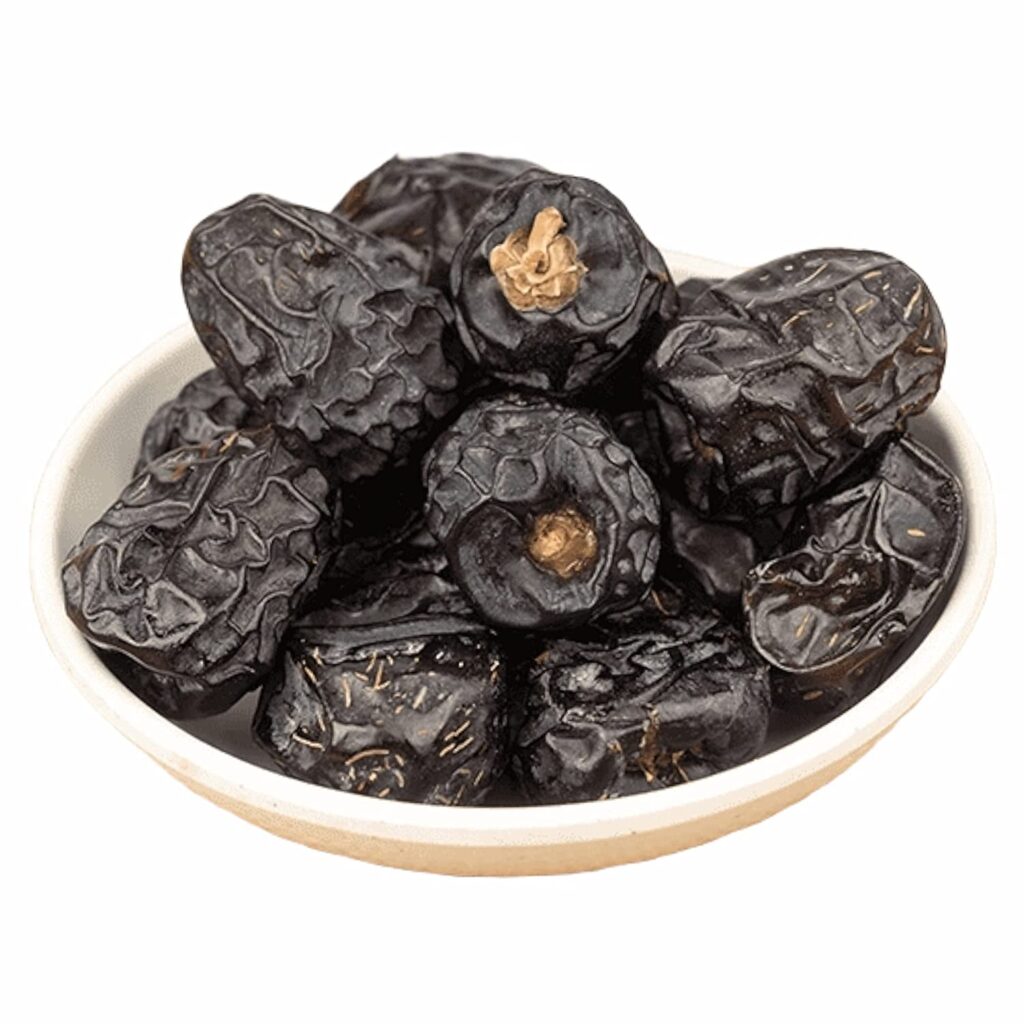
Kurma Ajwa, often called the “King of Dates,” is one of the most prized varieties of dates in the world. This premium date is native to Medina, Saudi Arabia, and is known for its rich flavor and deep cultural roots. Its long history and distinctive taste make Kurma Ajwa a favorite choice for many buyers. This article covers Kurma Ajwa’s origin and cultivation, its nutritional profile, and its culinary uses.
The origins and history
Kurma Ajwa has deep historical roots, making it a fruit tied closely to the traditions of Medina.
Historical background
Ajwa dates back centuries and is believed to have been first cultivated in Medina.
- These dates have long been part of the culture and daily life of Medina, cultivated there for generations.
- Over time, Ajwa has become a symbol of tradition and, among premium varieties, a mark of quality.
Cultivation and characteristics
Kurma Ajwa is grown primarily in Medina, and its cultivation process is intricate and labor-intensive.
Growing conditions
The soil and climate of Medina are essential for producing high-quality Ajwa.
- Warm temperatures, combined with the fertile soil, shape the date’s distinctive taste and texture.
- Farmers pay close attention to the trees to keep growth and harvest consistent.
Physical attributes
Ajwa is visually distinct, with a dark brown to black color and a soft, chewy texture.
- It has a natural sweetness that isn’t overly sugary, which makes it enjoyable across different palates.
- The size is medium, with a smooth outer surface and a delicate inner flesh.
Nutritional profile
Kurma Ajwa is dense in nutrients that make it a useful part of a balanced diet.
Vitamins and minerals
- It contains potassium, magnesium, calcium, and iron.
- It also carries B-complex vitamins and vitamin C.
Fiber content
Fiber is a notable component of this kurma, and it plays a role in digestion.
- Regular consumption, as part of a normal diet, contributes to fiber intake.
Antioxidants
Ajwa contains antioxidants, which help neutralize free radicals in the body — a normal part of how antioxidant-rich foods work.
Everyday use
Beyond its nutritional profile, Kurma Ajwa is a versatile, energy-dense snack.
Potassium content
The potassium in Kurma Ajwa is a mineral your muscles and nerves rely on for normal function.
Natural energy
Ajwa carries natural sugars — glucose, fructose, and sucrose — which give it a quick-energy profile similar to other fresh and dried fruit.
Vitamin and mineral content
The vitamins and minerals in the kurma contribute to a normal, balanced diet.
Culinary uses
Kurma Ajwa is a versatile ingredient that can be incorporated into various recipes.
Traditional uses
- Consumed as a snack, especially during Ramadan to break the fast.
- Often paired with milk for a filling drink.
Modern recipes
- Added to smoothies, salads, and baked goods for natural sweetness.
- Used in energy bars or blended with nuts for a quick snack.
Buying and storing Ajwa dates
To enjoy the best quality, it’s worth buying and storing these dates correctly. Our wholesale Ajwa buying guide has current pricing and grades if you’re sourcing in bulk.
Tips for buying
- Choose certified, authentic Ajwa dates from reputable sellers — our supplier selection guide covers what to check.
- Look for dates that are uniform in size, texture, and color.
Storage guidelines
- Store in a cool, dry place to maintain freshness.
- Keep them in airtight containers to prevent moisture loss.
In short
Kurma Ajwa carries genuine history, a distinctive taste, and a nutrient profile that fits well into a normal diet. Whether you’re buying for its taste or its cultural significance, it remains one of the more sought-after dates on the market.